

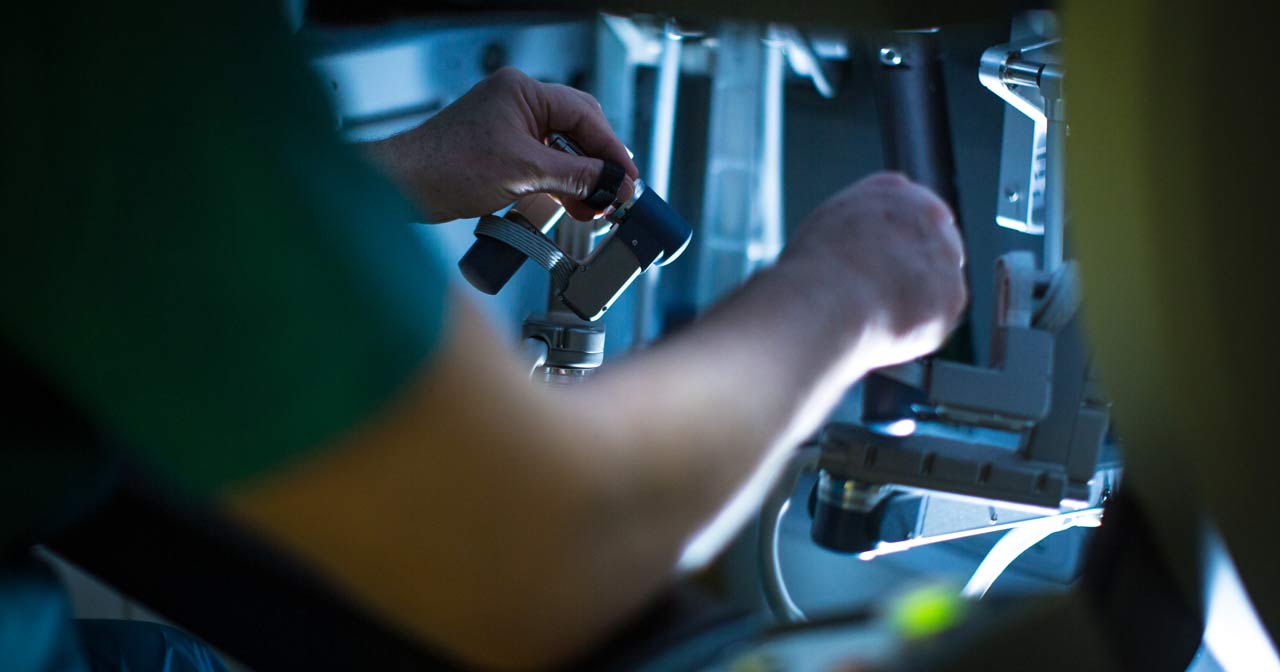
Since the late 20th century, doctors have used robotic surgery to remove cancers and perform other operations. Robotic technology allows surgeons to operate through tiny incisions using cameras, 3D guidance and highly precise instruments they control using a computer console.
Robotic surgery offers advantages, including better recovery times, fewer complications, and less pain and scarring. Today, many people benefit from robotic heart surgery, joint replacement procedures, gynecologic surgery, urologic surgery and spine surgery.
Advances in robotic-assisted thoracic surgery, in particular, allow surgeons to remove tumors in and around your lungs through small incisions rather than opening your chest or spreading your ribs. Let’s look at this increasingly accessible treatment option, who can benefit from it, and its advantages and disadvantages for people with lung cancer.
Who Is Eligible for Robotic-Assisted Surgery?
Eligibility for robotic lung cancer surgery depends on factors including your stage of cancer, your lung function and whether you are healthy enough to have surgery.
You might be eligible if:
- You have stage I or stage II lung cancer. Early-stage lung cancer is fairly small and has not spread or has spread only into tissues near your lungs.
- You will have enough lung function left after your cancer is removed. If you won’t have enough healthy lung tissue after cancer removal, your doctors will likely recommend nonsurgical treatments. Capital Health Cancer Center takes a team approach to lung cancer, with physicians from various specialties making recommendations on the right treatment for you.
- You are healthy enough to have surgery. If your heart and other organs aren’t strong enough, you might not be eligible for surgery. However, because robotic surgery is easier on your body, some people who are unable to tolerate open surgery might have the option of robotic surgery.
What Are the Types of Robotic Lung Cancer Surgery?
Lung cancer can affect any of the lung’s five lobes. Depending on your cancer’s size and location, you might have one of several robotic procedures.
- Lung-sparing surgery may be an option for small, early-stage tumors located in the outer portions of the lung.
- Lobectomy/bilobectomy removes one or more lobes of your lung.
- Pneumonectomy removes the entire lung.
Surgery may also include lymph node removal.
What Is Robotic Surgery Like?
Similar to traditional or open surgery, you’ll have robotic-assisted surgery under general anesthesia. Once you are asleep, your surgeon makes several incisions between your ribs. Robotic arms carrying a camera and operating tools are inserted into each incision.
Your surgeon operates the arms from a console where they can see everything going on inside you through the high-definition camera feed. The tiny instruments and advanced vision system allow your surgeon to make precise movements with greater flexibility than the human hand allows. Your surgeon removes tumors inside your lungs and in nearby tissue, such as your lymph nodes.
After surgery, a drainage tube is placed in your chest wall. Your surgeon closes your incisions, and you are moved to the recovery room.
People who have robotic lung cancer surgery generally spend about two to three days in the hospital.
Is Robotic Surgery Better for Lung Cancer?
Robotic surgery offers the benefits of fewer side effects and faster recovery. When it comes to lung cancer, it allows surgeons superior precision so they can remove the cancer while sparing as much healthy lung tissue as possible.
Pros and Cons of Robotic-Assisted Surgery
Robotic lung cancer surgery has plenty of advantages, including:
- Fewer complications
- Fewer hospital readmissions
- Less blood loss
- Less pain
- Minimal scarring
- Quicker return home and recovery
Still, robotic-assisted lung cancer surgery isn’t right for everyone. Typically, it’s used for people with stage I and II lung cancers. The procedures may also take longer to perform.
Robotic Surgery and Lung Cancer Outcomes
Compared with open surgery, robotic procedures often have better outcomes, such as fewer hospital readmissions, in the 30 days immediately afterward.
However, don’t worry if you aren’t offered a robotic-assisted procedure. Open surgery and minimally invasive robotic surgery have comparable five-year overall outcomes and survival rates. In other words, they’re equally effective in the long run. Your doctors will guide you to the procedure that best meets your needs.
The Bottom Line: An Accessible, Less-Invasive Thoracic Cancer Surgery
Capital Health Cancer Center now uses the da Vinci surgical system to perform robotic-assisted lung cancer surgeries close to home for patients in the Pennsylvania and New Jersey communities we serve. This once hard-to-find procedure offers:
- Easier surgical experience with no cutting through your breastbone or ribs
- Fewer complications during and after surgery
- Shorter hospital stays and faster recovery and return to your daily activities
Ask your oncologist if robotic lung cancer surgery is right for you.
Facing a new lung cancer diagnosis? Request a consultation with a member of Capital Health Cancer Center’s Lung Center of Excellence.