

Most people don’t think much about their pancreas. Tucked deep in your abdomen, this small organ quietly helps you digest food and regulate blood sugar. But when pancreatic cancer develops, it can be aggressive and difficult to detect early. That’s why patients and families often ask: Is pancreatic cancer hereditary?
The short answer: sometimes. While most cases are not inherited, a family history or certain genetic mutations can increase your risk. Understanding how genes play a role—and knowing when to get screened—can make a big difference in detecting the disease early.
The Genetics of Pancreatic Cancer
Just like you may inherit your mother’s smile or your father’s height, you can also inherit gene mutations that raise your risk of developing certain cancers, including pancreatic cancer.
In fact, about 10% of pancreatic cancers are linked to inherited genetic mutations. These mutations don’t guarantee you’ll develop cancer, but they can make it more likely.
Some of the better-known hereditary syndromes linked to pancreatic cancer include:
- Hereditary breast and ovarian cancer syndrome: This syndrome is caused by inherited BRCA1 and BRCA2 gene mutations. These mutations are well-known for significantly increasing the risk of breast and ovarian cancer.
- Hereditary pancreatitis: This is a rare condition where recurring inflammation of the pancreas (often starting in childhood) can lead to a higher chance of pancreatic cancer later in life.
- Lynch syndrome: This inherited condition raises the risk of several cancers, including colon and pancreatic cancer.
- Peutz-Jeghers syndrome: This is a rare genetic disorder associated with polyps in the digestive tract and increases a person’s cancer risk.
If you have a family member who has been diagnosed with pancreatic cancer—or with another cancer linked to these syndromes—talk with your doctor.
Is Pancreatic Cancer Inherited from the Mother or Father?
Pancreatic cancer can be inherited from either side of your family. If your mom or dad carries a gene mutation linked to the disease, you have a chance of inheriting it. This is why doctors will review your entire family history, not just one side.
Your risk might be higher if your family history includes any of the following:
- One or more relatives with pancreatic cancer
- Multiple relatives on the same side of your family have had cancers that seem unrelated, such as pancreatic, breast, ovarian or colon cancer
Even if these cancers seem unrelated, they can be linked by the same inherited gene mutation.
Why Early Screening Matters
Pancreatic cancer is known as a “silent” disease because symptoms often don’t show up until it’s advanced. When people are diagnosed later, treatment options can be limited. That’s why screening is so important for high-risk patients.
Detecting the disease early can make a dramatic difference. In fact, patients diagnosed at an early stage have a much higher chance of survival compared with those diagnosed later.
What Are Your Screening Options?
Unlike mammograms for breast cancer or colonoscopies for colon cancer, there isn’t a simple, routine test for pancreatic cancer. Screening is usually only offered to people at increased risk because of family history or gene mutations.
Your doctor may recommend:
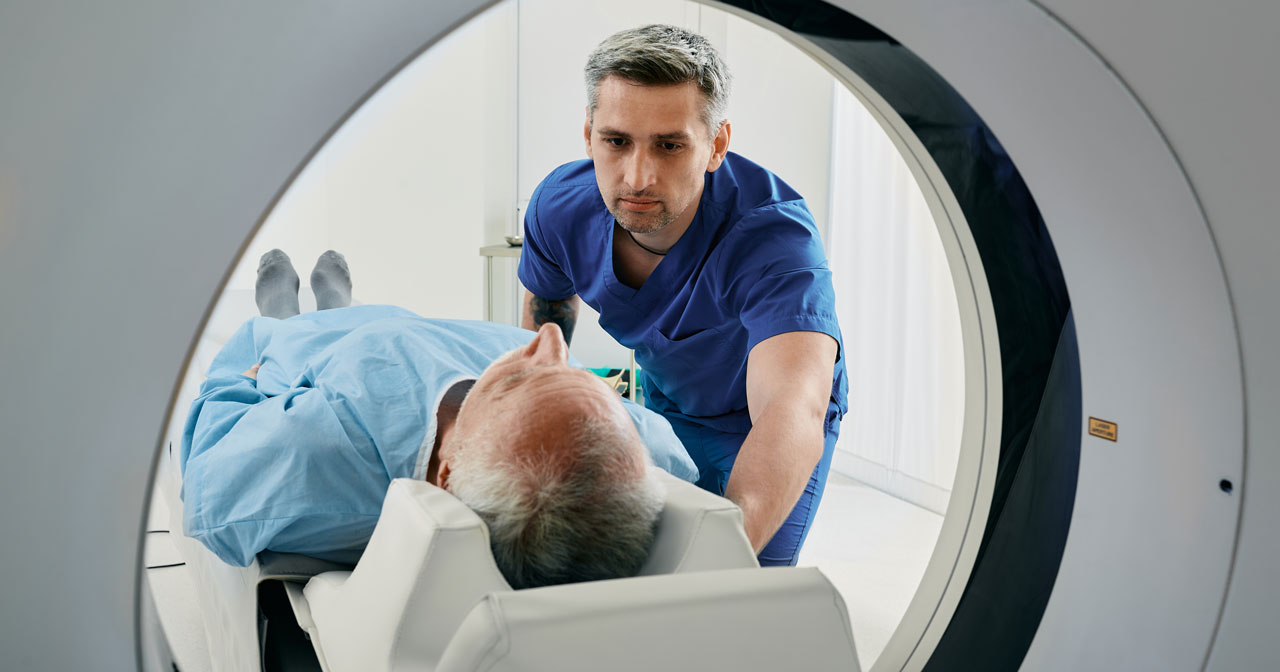
- CT scans: A CT scan uses X-rays to create detailed cross-sectional images of your body. Doctors sometimes order a CT scan to view the organs in the abdomen or to see if a tumor has spread.
- Endoscopic ultrasound (EUS): An EUS uses a tiny camera on a thin tube that is guided down your throat. It has a small ultrasound device that uses sound waves to create highly detailed pictures of your pancreas and surrounding areas.
- Genetic testing: A simple blood or saliva test can detect inherited mutations. Genetic tests can’t detect cancer, but they help reveal whether you’re at greater risk.
- MRI or magnetic resonance cholangiopancreatography (MRCP): An MRI is a powerful scan that uses magnets and radio waves to create detailed pictures of your pancreas without using radiation. An MRCP is a specific type of MRI that focuses on the pancreas and bile ducts.
Talking With Your Doctor About Genetic Testing
Bringing up cancer risk with your doctor can feel intimidating. However, genetic testing is becoming more common, and many doctors now recommend it for patients with a strong family history.
Here are some questions you might ask:
- “Given my family history, do you recommend genetic testing?”
- “What are my next steps if I test positive for a gene mutation?”
- “How often should I be screened for pancreatic cancer?”
- “What lifestyle changes could help lower my risk?”
Your doctor may refer you to a genetic counselor, a specialist who can explain test results and guide your next moves.
What About Symptoms?
Because pancreatic cancer symptoms often appear once the disease has progressed, knowing the early warning signs can help you act quickly. Some people report:
- Changes in stool (pale, greasy or floating)
- Jaundice (yellowing of the skin and eyes)
- New-onset diabetes
- Stomach or back pain
- Unexplained weight loss
If you notice these symptoms—especially if you also have a family history of pancreatic cancer—see a doctor right away.
Can You Prevent Pancreatic Cancer?
While there is no guaranteed way to prevent pancreatic cancer, you have the power to lower your risk.
One of the most important steps you can take is to not smoke, as it is one of the biggest risk factors for the disease. Maintaining a healthy weight, eating a balanced diet rich in fruits and vegetables, and limiting alcohol are also powerful ways to reduce your risk. Heavy drinking, for example, can lead to a condition called chronic pancreatitis, which increases your risk.
Finally, knowing your family history is a crucial tool. Living a healthy lifestyle can lower your overall cancer risk even if you have a gene mutation.
The Takeaway
So, is pancreatic cancer hereditary? Sometimes. If you have a family history of pancreatic cancer—or related cancers like breast, ovarian or colon cancer—it’s worth having a conversation with your doctor.
Genetic testing and other screening tests can save lives. Knowing your risk helps you stay one step ahead, even if you never develop the disease. And if you do carry an inherited gene mutation, you’ll have the knowledge and support to take action early.
At Capital Health, our team is here to guide you through every step—from genetic counseling to advanced screening options. If you’re concerned about your risk, don’t wait. Request an appointment today.