

It’s a phrase many women see in their mammogram report: “dense breast tissue.” But what does it actually mean? And more importantly, should it be a cause for concern?
If you’ve been told you have dense breasts, you’re not alone. Dense breast tissue is very common—and not necessarily something to worry about. Still, it’s important to understand what it means and how it may affect your breast cancer screening. Here’s what to know and what to do next.
What Is Dense Breast Tissue?
Breast tissue consists of three main parts: fatty tissue, fibrous connective tissue and glandular tissue. Everyone has some of each, but the amount can vary from person to person.
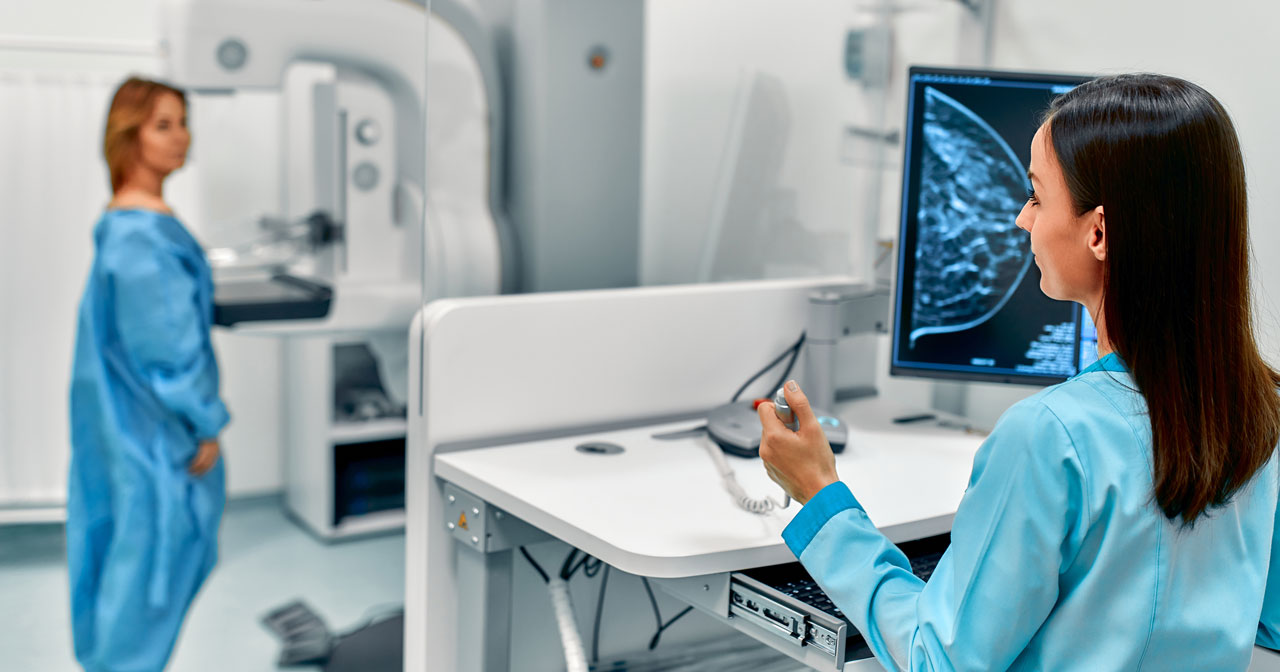
Dense breast tissue means there is more fibroglandular tissue and less fat. This tissue shows up white on a mammogram, which can make it harder to see small tumors or other changes. That’s why understanding breast density is so important.
How Common Is It?
Nearly 50% of women over age 40 have either extremely dense breast tissue or heterogeneously dense breast tissue—a mix of dense and fatty tissue—which is classified using the Breast Imaging Reporting and Data System (BI-RADS). Breast density is not a condition but rather a description of how breasts appear on a mammogram.
What Causes Dense Breast Tissue?
Some women naturally have dense breasts. Others may notice their breast density changes over time. Factors that can affect breast density include:
- Age: Younger women are more likely to have dense breasts. Breast density can change as you get older.
- Hormones: Hormone replacement therapy, certain birth control methods, pregnancy and menopause can all affect breast density.
- Genetics: Family history can play a role.
- Body weight: Women with lower body fat may have denser breasts.
Why Does It Matter?
Dense tissue isn’t harmful on its own, but it does make screening for breast cancer more difficult. On a mammogram, dense tissue and tumors appear white, meaning a cancer could be hiding in the dense areas.
Also, women with dense breast tissue have a higher risk of developing breast cancer than women with low breast density. The reason why isn’t fully understood.
What Does My Mammogram Report Mean?
If your mammogram report says you have dense breast tissue, it may use terms like:
- Heterogeneously dense
- Extremely dense
These terms are part of the BI-RADS system, which helps doctors describe what they see. “Heterogeneously dense” means more than half of the breast tissue is dense. “Extremely dense” means almost all the breast tissue is dense.
Do I Need More Tests?
If you have dense breasts, your doctor may recommend additional screening tests, especially if you have other risk factors like a family history of breast cancer, a personal history of breast cancer or biopsies, or genetic mutations (like those found on the BRCA1 or BRCA2 genes). Extra tests might include:
- Breast MRI: Usually recommended for people at higher risk of breast cancer, your doctor may recommend having this along with or after a mammogram.
- Breast ultrasound: This test uses sound waves to create a picture of the breast. It’s often used as an additional test to further investigate a finding seen on mammography or on MRI. Whole breast ultrasound can also be used in patients with dense breasts as an additional screening examination.
- Molecular breast imaging: This exam involves injecting a radioactive substance into your arm. Doctors use imaging to see if the substance is absorbed by cancer cells.
Not everyone with dense breasts needs these tests. It depends on overall personal risk. Talk with your healthcare provider about what’s right for you.
Can Dense Tissue Turn Into Cancer?
No, dense breast tissue does not turn into cancer. But it can hide cancer on a mammogram and is linked to a higher risk of developing breast cancer over time.
That’s why it’s important to know whether you have dense breasts and stay on top of regular screenings.
What Should I Do Next?
If you were told you have dense breast tissue, here are a few steps to take:
- Talk with your doctor. Ask if you need more tests or a different screening schedule based on your breast density and personal risk.
- Know your risk. Family history, age and lifestyle can all affect breast cancer risk.
- Stay on top of routine screenings. Even with dense breasts, regular mammograms are important.
The Bottom Line
Being told you have dense breast tissue may feel confusing at first. But it’s common, and knowing about it is the first step in staying proactive with breast health.
By understanding breast density and discussing a plan with a healthcare provider, women with dense breasts can take smart steps toward early detection and peace of mind.
Request an appointment for your next mammogram or call 609-394-6695 to schedule one today.